


What Is HVUT?
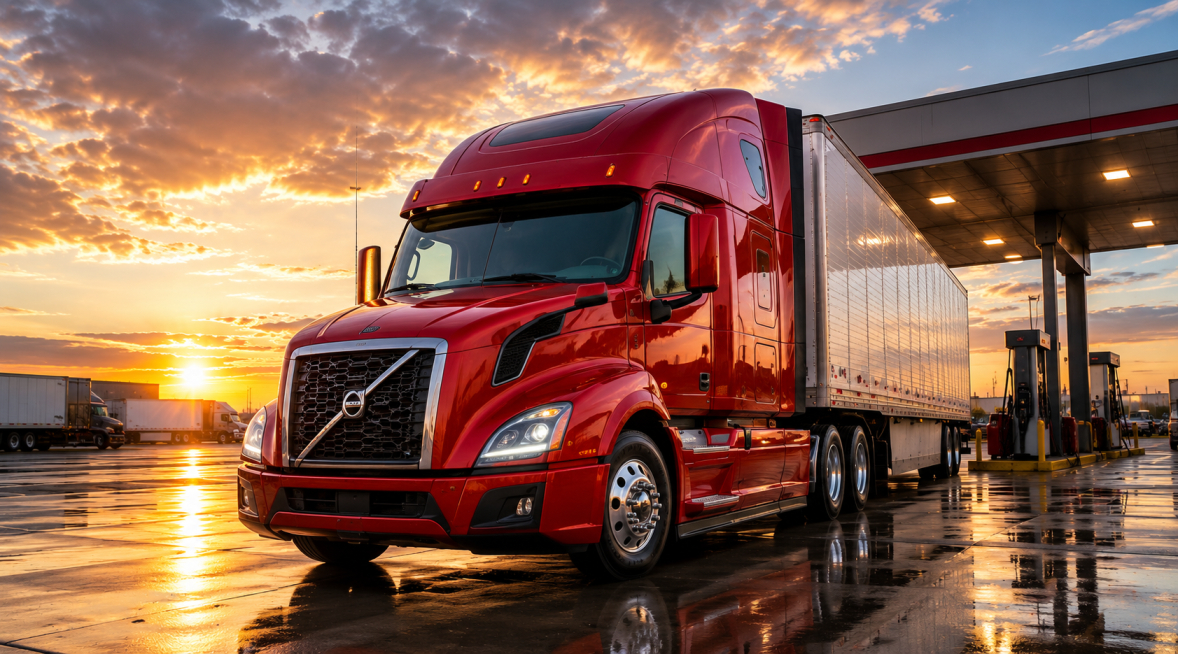
HVUT stands for Heavy Vehicle Use Tax. It is a federal excise tax collected by the IRS on heavy highway vehicles that operate on public roads in the United States. The HVUT meaning in practical terms: if you own or operate a commercial truck with a taxable gross weight of 55,000 pounds or more, you owe this tax annually and must prove payment before registering your vehicle at any state DMV, including in Colorado.
The HVUT is reported and paid using IRS Form 2290, formally called the Heavy Highway Vehicle Use Tax Return. Once the IRS accepts your return and confirms your HVUT payment, it issues a stamped Schedule 1 as your proof of HVUT payment. That stamped document is what the Colorado Division of Motor Vehicles requires before processing a commercial vehicle registration or renewal.
The tax is not unique to Colorado. It applies in all 50 states because it is a federal requirement. But how you register your vehicle after paying, which county office handles it, and what supporting documents Colorado specifically requires are all state-level details this guide covers.
Colorado HVUT Requirements: Who Must File
Colorado HVUT obligations follow federal IRS rules. Any owner or operator of a heavy highway vehicle registered in Colorado, or operating in Colorado on public highways, must file Form 2290 if their vehicle meets the weight threshold. This applies to individual owner-operators, small fleets, and large freight carriers alike.
You must file if your vehicle meets all three of these conditions:
- Taxable gross weight is 55,000 pounds or more - This is the total of the vehicle's unloaded weight, the trailer's unloaded weight, and the maximum load the truck is designed to carry. A truck rated for 80,000 lbs gross vehicle weight falls well into taxable territory.
- The vehicle is used on public highways - Public roads, interstates, and state highways in Colorado all count. Private roads and off-highway operations generally do not trigger HVUT unless the vehicle also uses public roads.
- You are the registrant on the vehicle title - The person or company named on the vehicle registration is responsible for filing Form 2290 and paying the HVUT tax.
HVUT Weight Categories and Tax Rates
The HVUT cost depends on where your vehicle falls in the IRS weight category system. Every 1,000 pounds over 55,000 lbs increases the annual tax. Vehicles over 75,000 pounds hit the maximum rate. The IRS HVUT 2290 tax table below shows how the calculation works for the 2026-2027 tax year.
| Taxable Gross Weight | Annual HVUT Tax | Notes |
|---|---|---|
| Under 55,000 lbs | $0 | Not subject to HVUT |
| 55,000 lbs | $100 | Base rate at minimum threshold |
| 55,001 to 75,000 lbs | $100 + $22 per 1,000 lbs over 55,000 | Rate increases incrementally |
| Over 75,000 lbs | $550 maximum | Flat cap regardless of weight above 75k |
| Suspended vehicles (under 5,000 miles) | $0 | Must still file Form 2290 to claim |
| Agricultural suspended (under 7,500 miles) | $0 | Farm vehicles only; filing still required |
For a truck at exactly 65,000 lbs, the HVUT tax calculation works out to $100 plus $22 for each 1,000 lbs over 55,000, which is 10 increments, or $220 added to $100, for a total of $320 per year. Use the HVUT tax calculator on SimpleForm2290 to get an exact figure for your vehicle's weight before filing.
The HVUT due date for vehicles that enter service mid-year is prorated. A vehicle first put on the road in November pays only the months remaining in the tax year, not the full annual amount.
HVUT 2290 Due Date for 2026: When Colorado Truckers Must File
The HVUT due date follows the IRS tax year, which runs July 1 through June 30 of the following year. For most Colorado truckers with vehicles already in service, the HVUT 2290 due date for the 2026-2027 period is August 31, 2026. Vehicles added to your fleet later in the year follow a rolling deadline based on first-use month.
Standard Annual Deadline
- Tax year: July 1, 2026 to June 30, 2027
- E-filing opens: July 1, 2026
- Due date for July first-use vehicles: August 31, 2026
- Filing early recommended to get Schedule 1 before DMV renewal
Mid-Year Vehicle Deadlines
- August first-use: due September 30
- September first-use: due October 31
- October first-use: due November 30
- November first-use: due December 31
- December first-use: due January 31, 2027
HVUT 2290 Exemptions: What Vehicles Are Exempt
Not every heavy vehicle triggers a tax payment. The IRS HVUT exemption rules cover several categories. Knowing whether your vehicle qualifies can save you money, but you must still file the HVUT 2290 form in most cases to formally claim the exemption.
HVUT Exemption Categories
- Low-mileage suspension: Vehicles expected to travel fewer than 5,000 miles on public highways (7,500 for agricultural vehicles) are suspended from tax. File Form 2290 with the suspension box checked.
- Government vehicles: Vehicles owned and operated by federal, state, or local government agencies are exempt. File is still required but no tax is owed.
- Qualified blood collector vehicles: Vehicles used by qualified blood collection organizations meeting IRS criteria.
- Mobile machinery: Vehicles that are not designed for transportation and meet IRS mobile machinery definitions.
What Is the 6,000 Pound Vehicle Loophole?
The commonly referenced 6,000 pound vehicle loophole refers to a Section 179 tax deduction rule for business vehicles, not an HVUT exemption. Under that provision, vehicles with a gross vehicle weight rating (GVWR) over 6,000 lbs may qualify for accelerated depreciation deductions on federal income taxes. This is a business tax deduction and is entirely separate from Form 2290 HVUT obligations. If your vehicle weighs 55,000 lbs or more and uses public roads, the HVUT still applies regardless of any Section 179 treatment.
The HVUT exemption form is not a separate IRS document. Exemptions and suspensions are claimed directly on Form 2290 itself by selecting the appropriate category when completing the vehicle list. An HVUT exemption claim must still be submitted to the IRS to generate a Schedule 1, which Colorado DMV requires even for suspended vehicles.
Colorado DMV and Proof of HVUT Payment
The Colorado Division of Motor Vehicles, along with county clerk and recorder offices that handle vehicle registration, requires your IRS-stamped Schedule 1 before they will process any commercial vehicle registration or renewal for trucks at 55,000 pounds or more.
Proof of HVUT payment for Colorado DMV purposes means the stamped Schedule 1 specifically. A bank statement showing a payment withdrawal, a receipt from your e-file provider, or any other document does not substitute for the IRS stamp. The Schedule 1 must show the IRS digital watermark on the electronically stamped version, or the original IRS ink stamp on a paper-filed copy.
Colorado county DMV offices handle registrations locally. If you are renewing at your county clerk's office, bring a printed copy of your emailed Schedule 1. The IRS-stamped electronic copy is legally accepted at all Colorado county offices. If your county requests a "wet stamp" or original copy, clarify that the digital stamp on the e-filed Schedule 1 satisfies IRS proof of payment requirements under federal regulation.
Colorado HVUT Form 2290 PDF
The Colorado HVUT form is the standard IRS Form 2290. There is no separate Colorado-specific version. The IRS publishes the official Form 2290 PDF and the Colorado HVUT form 2290 PDF are the same document, used identically across all 50 states. The filing information on the form reflects federal requirements, and the resulting Schedule 1 satisfies Colorado DMV proof requirements nationwide.
If you prefer to review the form before e-filing, or need a Colorado HVUT pdf copy for your records, the official IRS Form 2290 is available below. Note that paper-filing using this PDF means a multi-week wait for your stamped Schedule 1 by mail. E-filing through SimpleForm2290 delivers the same outcome in minutes.
How to File Colorado HVUT Online with SimpleForm2290
Filing the HVUT 2290 form electronically takes about 10 minutes when you have your documents ready. Here is how it works step by step for Colorado truckers.
-
Gather your filing information You need your Employer Identification Number (EIN), the VIN for each vehicle being reported, the taxable gross weight of each truck, and the first-use month for any vehicles added mid-year. You cannot file using a Social Security Number.
-
Create your account at SimpleForm2290 Register at simpleform2290.com with your business name, EIN, and email. This becomes your filing account for all future HVUT 2290 returns. Returning Colorado truckers can log in with existing credentials and pull prior-year vehicle data.
-
Enter your vehicle details Add each truck by VIN and taxable gross weight category. Select the first-use month for each vehicle. The system calculates your HVUT cost automatically and shows a line-item breakdown before you pay.
-
Choose your HVUT payment method Pay directly through the portal via Electronic Funds Withdrawal from your business bank account, EFTPS, or mail a check with Form 2290-V. Credit and debit card options are available through IRS-approved processors.
-
Submit and download your stamped Schedule 1 Once the IRS processes your return, your stamped Schedule 1 arrives by email. Download and print it for your Colorado DMV registration appointment or county clerk visit. It is also saved to your account for retrieval any time.
File Your Colorado HVUT Online and Get Schedule 1 Today
SimpleForm2290 is IRS-authorized for Colorado HVUT e-filing. Same-day Schedule 1 delivery, transparent pricing from $9.95, and 20% off with code HVUT20.
File Form 2290 Now View PricingIRS HVUT Support and Contact Information
For questions about IRS HVUT 2290 returns, payment status, or account issues, the IRS Business and Specialty Tax Line handles HVUT inquiries at 1-800-829-4933. For questions specifically about HVUT 2290 e-file rejections or Schedule 1 delays, your authorized e-file provider's support team is typically faster to reach and better equipped to resolve filing-specific issues.
SimpleForm2290 support is available 7 AM to 8 PM CST in English and Spanish. Colorado truckers with questions about their HVUT filing, proof of payment requirements, or Schedule 1 reprint requests can reach the SimpleForm2290 team through the support center on the site.
Related Resources
Frequently Asked Questions
The HVUT tax, or Heavy Vehicle Use Tax, is a federal excise tax imposed by the IRS on heavy highway vehicles with a taxable gross weight of 55,000 pounds or more that operate on public roads. The tax is reported and paid annually using IRS Form 2290. The maximum HVUT cost is $550 per vehicle per year for trucks over 75,000 lbs. Once paid, the IRS issues a stamped Schedule 1 as proof of HVUT payment, which is required for commercial vehicle registration in all states including Colorado.
The HVUT due date for the 2026-2027 tax year is August 31, 2026, for vehicles first used on public highways in July. Vehicles put into service in later months file by the last day of the following month. E-filing through an IRS-authorized provider like SimpleForm2290 opens July 1, 2026.
Proof of HVUT payment is the IRS-stamped Schedule 1, which is Part II of Form 2290. After you file and pay your HVUT, the IRS stamps Schedule 1 and returns it to you. This stamped document is what your state DMV, including the Colorado Division of Motor Vehicles, requires before processing commercial vehicle registration. When you e-file, the stamped Schedule 1 is delivered by email usually within hours of IRS acceptance.
Vehicles exempt from paying the HVUT include those expected to travel fewer than 5,000 miles (7,500 for agricultural vehicles), government-owned vehicles, qualified blood collector vehicles, and certain mobile machinery. These vehicles are suspended from paying the tax but must still file Form 2290 to claim the HVUT 2290 exemption and receive a Schedule 1. There is no threshold below which you skip the filing entirely if your vehicle otherwise meets the weight requirement.
The $800 refund in Colorado refers to the Colorado TABOR (Taxpayer's Bill of Rights) refund, which is a state income tax mechanism that returns excess state revenue to residents in certain years. It is entirely unrelated to the federal HVUT or Form 2290. If you are looking for an HVUT refund specifically, that is handled through IRS Form 8849 (Claim for Refund of Excise Taxes) for situations such as a vehicle being sold, destroyed, or used below the mileage threshold during the tax year.
The 6,000 pound vehicle loophole is a term used for the Section 179 federal income tax deduction that applies to business vehicles with a gross vehicle weight rating over 6,000 lbs. It allows qualifying businesses to deduct the cost of certain vehicles more quickly for income tax purposes. It has no connection to HVUT or Form 2290. If your commercial vehicle weighs 55,000 pounds or more and travels on public highways, the HVUT still applies regardless of any Section 179 deductions you claim on your income tax return.
Yes, if your vehicle has a taxable gross weight of 55,000 pounds or more and uses public highways in Colorado or any other state, the federal HVUT applies. Colorado HVUT compliance is enforced at the state DMV level: you cannot register or renew your commercial vehicle in Colorado without a current IRS-stamped Schedule 1. The tax is the same whether you drive exclusively in Colorado or operate across multiple states.
Colorado HVUT Filing Made Simple
Get your HVUT 2290 form filed and your stamped Schedule 1 delivered today. SimpleForm2290 is IRS-authorized, starts at $9.95, and 20% off with code HVUT20.
File Now How It Works