




An Employer Identification Number (EIN) and a Tax ID are federal identifiers used by the IRS to track tax obligations for businesses and individuals. Many truck operators and fleet owners ask, is EIN and Tax ID the same and the short answer is: yes, in most business contexts, they are interchangeable terms for the same nine-digit number.
However, the nuance matters more than the label. "Tax ID" is an umbrella term that can refer to several different identification numbers depending on who is filing. For heavy vehicle operators preparing to file Form 2290 (the Heavy Vehicle Use Tax return), understanding exactly which identifier the IRS requires and why can mean the difference between a smooth filing and a costly delay. This blog breaks down the EIN vs. Tax ID distinction, who needs to file Form 2290, and how to get your filing done right the first time using Simple Form 2290.
EIN vs. Tax ID: What's the Actual Difference?
The IRS uses several types of tax identification numbers:
| Tax ID Type | Who It's For | Issued By |
|---|---|---|
| EIN (Employer Identification Number) | Businesses, LLCs, corporations, sole proprietors | IRS |
| SSN (Social Security Number) | Individual taxpayers | Social Security Administration |
| ITIN (Individual Taxpayer Identification Number) | Non-resident aliens without SSN | IRS |
| TIN (Taxpayer Identification Number) | Broad umbrella term; includes EIN, SSN, ITIN | IRS |
So is EIN and Tax ID the same? When truckers and business owners use the phrase "Tax ID," they almost always mean EIN because Form 2290 requires an EIN, not an SSN, even for sole proprietors operating a single truck.
Key Rule: The IRS does not accept Social Security Numbers for Form 2290 filings. You must have an active EIN before you can file.
Why the IRS Requires an EIN for Form 2290
Form 2290 is the federal return for the Heavy Vehicle Use Tax (HVUT) — an annual excise tax on highway motor vehicles with a gross taxable weight of 55,000 pounds or more. The IRS mandates EIN usage here because:
- It separates business tax obligations from personal income tax records
- It ensures Schedule 1 (your stamped proof of payment) is tied to a trackable business entity
- It supports IRS audit and compliance workflows for commercial vehicles
If you've ever asked is EIN and Tax ID the same while setting up your trucking business, the practical answer for HVUT purposes is: EIN is the only Tax ID that counts for Form 2290.
Who Needs to File Form 2290?
Understanding who files Form 2290 helps clarify why EIN matters so much. Here's a quick breakdown:
Who must file Form 2290:
- Owner-operators with one or more trucks with a taxable gross weight of 55,000 lbs or more
- Fleet managers and trucking companies operating heavy vehicles on public highways
- Lessees of heavy trucks used on public roads
- Agricultural vehicles exceeding weight thresholds (though some qualify for suspended tax status)
Who is required to file Form 2290 by deadline: Anyone who places a qualifying heavy vehicle on a public highway during any month of the tax year must file by the last day of the following month. For most operators, the annual deadline is August 31 (for vehicles first used in July).
Who files Form 2290 for multiple vehicles: Fleet owners can use bulk and fleet filing to file for multiple vehicles under one EIN in a single submission — a major time-saver compared to filing individually.
According to IRS data, approximately 3.5 million Form 2290 returns are filed annually, covering millions of heavy vehicles across the U.S. trucking industry.
How to Get an EIN Before Filing Form 2290
If you don't yet have an EIN, the IRS allows you to apply for EIN online through the IRS website at no charge. The number is typically issued instantly. However, there is a critical timing rule:
You must wait 2 weeks after receiving your EIN before the IRS systems recognize it for e-file purposes.
This is a common trap for new owner-operators. Plan your EIN application at least two weeks before your Form 2290 due date.
Once you have your EIN, it ties directly to your:
- Vehicle Identification Number (VIN) reported on the 2290
- IRP (International Registration Plan) registration requirements
- Schedule 1 Form 2290 — your stamped proof of HVUT payment, required for vehicle registration in most states
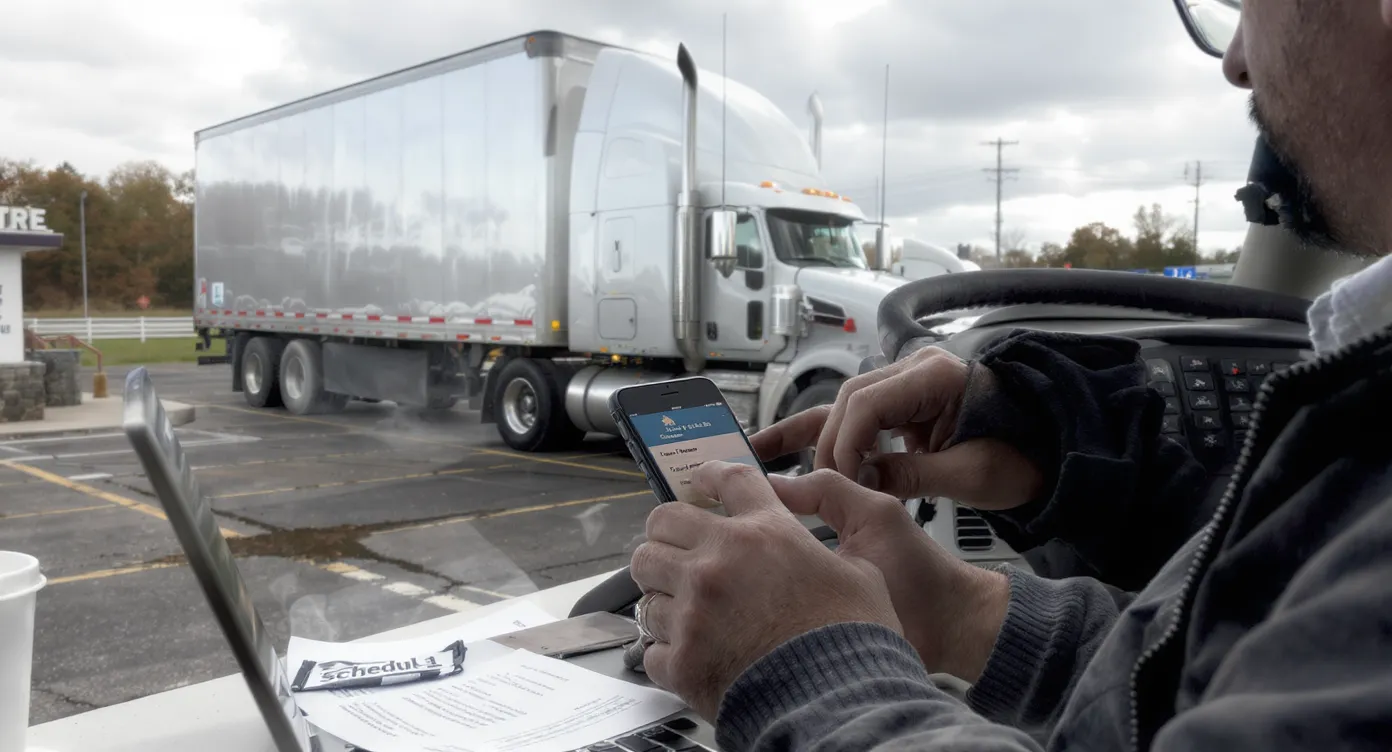
Filing Form 2290 with Simple Form 2290
Now that you understand why is EIN and Tax ID the same matters in this context, let's talk about the filing process itself.
Simple Form 2290 is an IRS-authorized e-file provider that makes HVUT filing fast, accurate, and affordable. Here's why thousands of owner-operators and fleet managers choose it:
Speed
E-file your return and receive your stamped 2290 Schedule 1 in minutes — not weeks.
Accuracy
Built-in validation checks catch common errors like mismatched EINs or incorrect taxable gross weight categories before submission.
Cost
Simple Form 2290 is one of the cheapest 2290 e-file options available, with transparent pricing and no hidden fees — particularly valuable for single-truck operators watching every dollar.
Fleet Support
For companies managing large fleets, Simple Form 2290 supports bulk and fleet filing — upload multiple VINs at once and file under a single EIN.
Compliance
As a trusted IRS e-file partner, Simple Form 2290 keeps you compliant with HVUT tax rates by weight, first use month IRS 2290 rules, and taxable weight amendments if your vehicle's weight changes mid-year.
HVUT Tax Rates at a Glance
Understanding your tax liability starts with knowing the rate table. Here's a simplified version of the IRS truck tax table:
| Taxable Gross Weight | Annual Tax |
|---|---|
| 55,000 – 75,000 lbs | $100 + $22 per 1,000 lbs over 55,000 |
| Over 75,000 lbs | $550 (maximum) |
| Suspended vehicles (under 5,000 miles/year) | $0 (but filing still required) |
Getting your taxable gross weight category right is critical — errors here can trigger IRS notices or delay your Form 2290 Schedule 1 issuance, which most states require for IRP truck registration.
EIN + IRP: The Connection You Can't Ignore
Many truckers don't realize how tightly EIN, Form 2290, and IRP registration are connected. To register or renew plates under IRP, most states require a stamped Schedule 1 — and that stamped Schedule 1 only comes after a successful Form 2290 filing using a valid EIN.
Think of it as a compliance chain:
EIN → Form 2290 filing → Stamped Schedule 1 → IRP registration → Legal operation on public highways
This is why is EIN and Tax ID the same isn't just a trivia question — it's the foundation of your entire compliance workflow. Using the wrong ID type, or filing before your EIN is active in IRS systems, breaks the entire chain.
Frequently Asked Questions
Is EIN and Tax ID the same thing for Form 2290 purposes?
Yes. For Form 2290 filing, "Tax ID" refers specifically to your EIN. The IRS does not accept Social Security Numbers for HVUT returns. Every filer — including sole proprietors with a single truck — must use an EIN.
Who needs to file a 2290 form?
Any person or business that operates a heavy highway motor vehicle with a taxable gross weight of 55,000 pounds or more on U.S. public roads must file Form 2290 and pay the HVUT. This includes owner-operators, trucking companies, lessees, and some government or agricultural operators.
What happens if I use my SSN instead of my EIN on Form 2290?
The IRS will reject your filing. SSNs are not accepted for Form 2290. If you don't have an EIN yet, apply through the IRS website immediately and wait at least two weeks before e-filing.
Can I file Form 2290 online without a paper return?
Yes — and it's strongly recommended. Electronic filing through an IRS-authorized provider like Simple Form 2290 gets you a stamped Schedule 1 much faster than paper filing, which can take 4–6 weeks. For fleets with 25 or more vehicles, e-filing is actually mandatory under IRS rules.
Is EIN and Tax ID the same if I recently changed my business structure?
Not necessarily. If you changed from a sole proprietorship to an LLC or corporation, the IRS may have issued you a new EIN. Always verify that the EIN on your Form 2290 matches your current legal business entity — a mismatch is one of the most common causes of Schedule 1 delays.
Final Thoughts
So, is EIN and Tax ID the same? For Form 2290, absolutely. Your EIN is your Tax ID, and it's the non-negotiable starting point for HVUT compliance. Whether you're an owner-operator hauling freight across state lines or a fleet manager overseeing hundreds of vehicles, getting your EIN right means your Schedule 1 arrives on time, your IRP registration stays current, and your trucks stay on the road legally.
Simple Form 2290 takes the complexity out of the filing process — from validating your EIN and VIN to calculating the right tax rate and delivering your stamped Schedule 1 in minutes. If you're ready to file, there's no simpler, faster, or more affordable way to stay compliant.
Ready to file? Visit SimpleForm2290 — the trusted IRS-authorized e-file provider built for truck operators like you.