

Confused about PPIN numbers and whether you need one for Form 2290 e-filing? This guide clarifies what a PPIN is, who needs it, and which business identifiers actually matter when you file your federal heavy vehicle use tax.
If you've heard terms like PPIN, EIN, TIN, and IPPIN thrown around and weren't sure what they meant, you're not alone. These acronyms can be confusing, especially when filing taxes or e-filing Form 2290. The short answer: most truck drivers and business owners don't need a PPIN at all. What you typically need is an EIN.
What Is PPIN?
PPIN stands for Preparer Personal Identification Number. It's a unique 6-digit number issued by the IRS specifically to tax return preparers, accountants, and enrolled agents who file tax returns on behalf of clients.
Think of it this way: if you're someone who prepares and signs tax returns for other people as part of your profession, the IRS requires you to have a PPIN. It's a credential that identifies you as an authorized tax professional.
Who Needs a PPIN?
A PPIN is required for:
- Certified public accountants (CPAs) who prepare tax returns
- Enrolled agents authorized to represent clients before the IRS
- Tax attorneys who prepare returns
- Tax professionals and accountants who sign and file returns on behalf of others
- Tax return preparers in any capacity who file documents with the IRS
If you're a truck driver, owner operator, or business owner filing your own Form 2290 or tax returns, you do not need a PPIN. That's only for professionals who prepare returns for others.
PPIN vs. EIN: What's the Difference?
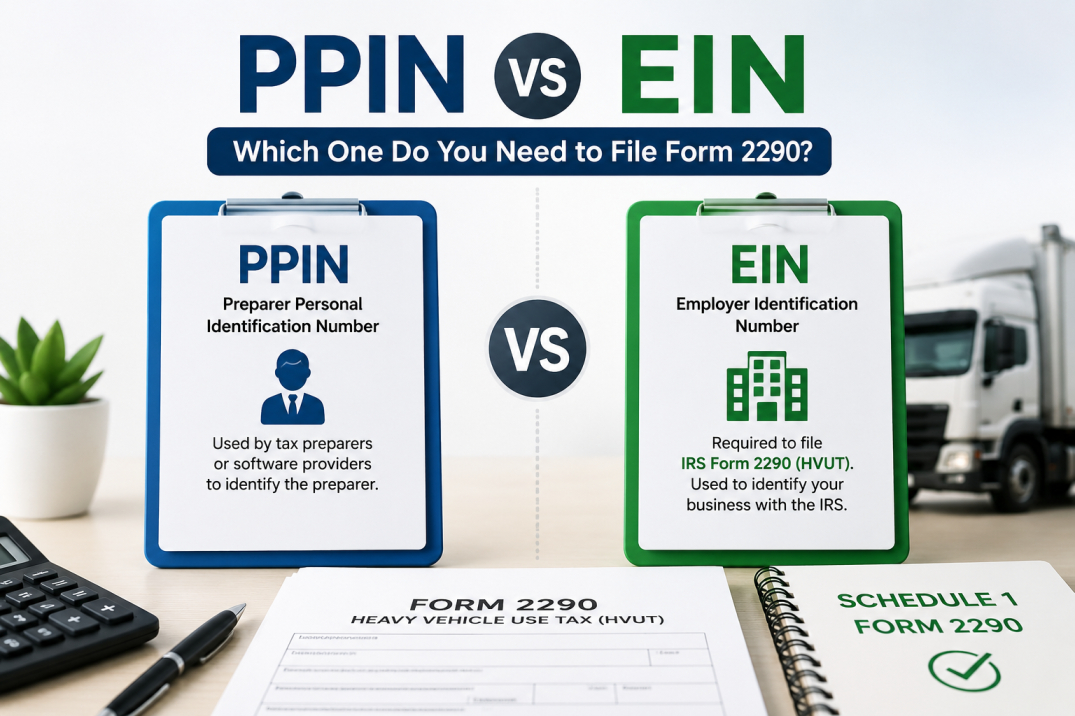
The key distinction: PPIN identifies a tax preparer, while EIN identifies a business. You need an EIN if you're running a trucking business and filing Form 2290. You need a PPIN only if you're the one preparing and signing other people's returns.
Does PPIN Apply to Form 2290 E-Filing?
What You Actually Need for Form 2290 E-Filing
When you file Form 2290 online, the IRS requires:
- Your EIN or business tax identification number
- Your truck's Vehicle Identification Number (VIN) and registered weight
- The tax year you're filing for
- Your business address
That's it. No PPIN needed. If you're filing through an authorized e-file provider like SimpleForm2290, the process is even simpler because they handle the IRS submission on your behalf.
Understanding EIN: What You Need to Know
Since EIN is what actually matters for business tax purposes and Form 2290, let's dive into what an EIN is and how to get one.
What Is an EIN?
An EIN, also known as a Federal Tax Identification Number, is a unique 9-digit number assigned by the IRS to identify your business entity. It functions for your business the same way a Social Security Number (SSN) functions for you as an individual.
Your EIN looks like this: XX-XXXXXXX (with hyphens) or XXXXXXXXX (without hyphens).
When Do You Need an EIN?
You generally need an EIN to:
- Hire employees or run a payroll system
- Open a business bank account in your business name
- File business tax returns for corporations, partnerships, or LLCs
- Apply for business loans or credit lines
- File Form 2290 for your heavy vehicle use tax
- Obtain business licenses or permits
How to Apply for an EIN?
Applying for an EIN is completely free. You can get one in three ways:
EIN Number Lookup: Finding Your EIN
If you've misplaced or forgotten your EIN, you can find it by:
- Checking your most recent business tax return or IRS correspondence
- Looking at old business bank account statements
- Calling the IRS Business and Specialty Tax Line at (800) 829-4933 with your Social Security Number and business information
- Checking your bookkeeping records or accounting software
The IRS will need to verify your identity before providing your EIN over the phone, so have your business information and personal details ready.
Common Questions About Business Identification Numbers
What is PPIN in real estate?
In real estate, PPIN doesn't apply. Real estate professionals might have different licensing numbers depending on their state, but PPIN is specific to tax preparers. If you're a real estate broker filing business taxes, you'd use an EIN, not a PPIN.
What is PPIN control?
PPIN control refers to the security measures and requirements the IRS has put in place for tax preparers to maintain and protect their PPIN. PPINs must be kept confidential, and preparers are responsible for securing their credentials. This isn't something that applies to business owners filing Form 2290.
What is an IPPIN number?
IPPIN stands for Identity Protection Personal Identification Number. It's a 6-digit number issued by the IRS to individuals who want to add extra security to their personal tax filings. It protects against identity theft. An IPPIN is different from a PPIN and is used by individuals, not businesses or tax preparers.
How do I apply for an EIN number?
Apply for an EIN online at irs.gov, by mail using Form SS-4, by fax, or by calling (800) 829-4933. The online method is fastest and you'll get your EIN immediately. You'll need your Social Security Number, business name, business address, and information about your business type.
How much does it cost to get an EIN number?
Getting an EIN is completely free. The IRS doesn't charge any fees for applying for an EIN, whether you apply online, by mail, or by phone. If someone charges you for an EIN, they're overcharging you. Go directly to irs.gov or call the IRS.
Does a DRE need an EIN?
A DRE (Department of Real Estate) license holder, typically a real estate agent or broker, may need an EIN depending on how their business is structured. Sole proprietors might use their SSN, but if you operate as an LLC, corporation, or partnership, you need an EIN for business tax purposes. Check with your state's tax authority for specific requirements.
Do you get an EIN first or LLC first?
You form your LLC first (file your Articles of Organization with your state), then apply for an EIN. The IRS requires your business to be legally formed before you can apply for an EIN. Once your LLC is official with your state, you can immediately apply for your EIN online and have it the same day.
Form 2290 E-Filing Without the Confusion
Here's what you need to remember when filing Form 2290:
You Need Your EIN
If your trucking business has an EIN, provide that. If you're a sole proprietor without an EIN, you can use your SSN to file Form 2290 (though getting an EIN first is recommended for business credibility).
You Don't Need a PPIN
Unless you're a tax preparer, you don't need a PPIN. You're the business owner, not the tax professional preparing returns for others.
Your Tax Professional May Use Their PPIN
If you hire a tax professional or accountant to file your Form 2290 on your behalf, they will include their PPIN on the return to identify themselves as the preparer. You don't need to provide or apply for one.
Filing Form 2290? Keep It Simple
E-file with SimpleForm2290 and skip the acronym confusion. We handle the Form 2290 submission using your EIN, issue your Schedule 1 receipt the same day, and keep everything compliant with IRS requirements.
E-File Your Form 2290 TodayQuick Reference: Business ID Numbers
Here's a quick reference guide to keep the acronyms straight:
- EIN (Employer Identification Number): Your business identifier. Use this for Form 2290, business taxes, and bank accounts.
- SSN (Social Security Number): Your personal identifier. Sole proprietors can use this instead of an EIN, though an EIN is preferred.
- PPIN (Preparer Personal Identification Number): For tax preparers only. You don't need this unless you prepare returns for others.
- TIN (Taxpayer Identification Number): Umbrella term that includes SSNs, EINs, ITINs, and other tax IDs.
- IPPIN (Identity Protection PIN): Optional security number for individuals to prevent identity theft on personal returns.