


05-12-2026
What’s the Difference Between BOC-3 Filing and Form 2290 Tax Filing?


A BOC-3 is a federal filing that designates a process agent for your trucking business, while Form 2290 is an IRS tax form used to report and pay the Heavy Vehicle Use Tax (HVUT). Both filings are mandatory for most commercial trucking operations, but they serve entirely different legal and financial purposes. This blog breaks down exactly what each filing requires, who needs it, when deadlines hit, and how tools like SimpleForm2290 help carriers stay compliant without the paperwork headache.
What Is a BOC-3 Filing?
BOC-3 stands for "Blanket of Coverage." It is an FMCSA-required form that appoints a process agent in every state where your trucking company operates or passes through. The process agent is a legal representative authorized to receive court documents on your behalf.
Who needs a BOC-3 filing?
- For-hire motor carriers
- Freight brokers
- Freight forwarders
- Leasing companies operating under FMCSA authority
Without an active BOC-3, the FMCSA will not grant or maintain your operating authority (MC number). Simply put, you cannot legally operate as a for-hire carrier without it.
Key facts about BOC-3:
| Detail | Information |
|---|---|
| Governing Agency | FMCSA (Federal Motor Carrier Safety Administration) |
| Purpose | Appoints a process agent in all operating states |
| Who Files | Carriers, brokers, freight forwarders |
| When to File | Before receiving FMCSA operating authority |
| Cost | Varies by service provider |
| Renewal | No annual renewal required (but must stay active) |
The FMCSA BOC-3 requirement applies at the federal level, and many carriers choose to file BOC-3 online through authorized process agent companies. The FMCSA form BOC-3 itself is submitted electronically through the Unified Registration System (URS).
What Is Form 2290 Tax Filing?
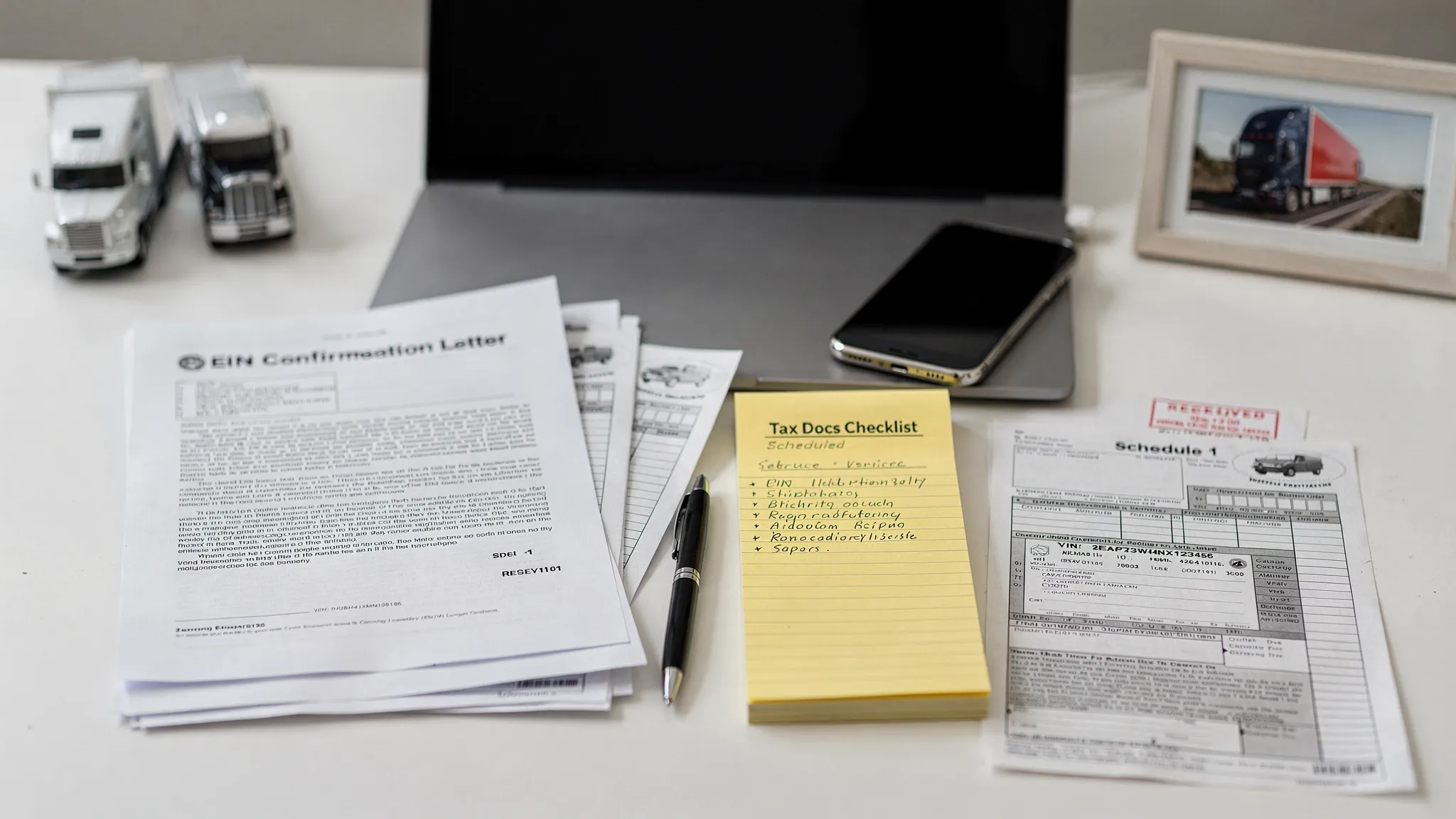
Form 2290 is the IRS form for reporting and paying the Heavy Vehicle Use Tax. Any vehicle with a taxable gross weight of 55,000 pounds or more that travels on public highways must file. This includes most Class 7 and Class 8 trucks.
Who needs to file Form 2290?
- Owner-operators
- Fleet owners
- Trucking companies with vehicles at or above 55,000 lbs taxable gross weight
The tax is calculated based on the vehicle's taxable gross weight category, and the filing produces a Form 2290 Schedule 1, which serves as proof of HVUT payment. States require this stamped Schedule 1 for vehicle registration and IRP truck registration.
2290 HVUT Tax Rates by Weight (2026-2027):
| Taxable Gross Weight | Annual Tax |
|---|---|
| 55,000 lbs | $100 |
| 60,000 lbs | $227 |
| 70,000 lbs | $408 |
| 75,000 lbs | $550 |
| 75,001 lbs and above | $550 (maximum) |
Suspended vehicles (those traveling fewer than 5,000 miles annually, or 7,500 for agricultural vehicles) still need to file but pay $0.
Using a trusted IRS Authorized E-file Provider like SimpleForm2290 lets you e-file, receive your stamped Schedule 1 within minutes, and avoid IRS processing delays.
BOC-3 vs. Form 2290: Side-by-Side Comparison
| Category | BOC-3 Filing | Form 2290 Filing |
|---|---|---|
| Governing Agency | FMCSA | IRS |
| Purpose | Legal process agent designation | Heavy Vehicle Use Tax payment |
| Who Files | Carriers, brokers, forwarders | Truck owners (55,000 lbs+) |
| Deadline | Before operating authority | August 31 (July first-use vehicles) |
| Annual Renewal | No | Yes |
| Proof of Compliance | Active FMCSA record | Stamped Schedule 1 |
| Online Filing | Yes | Yes (via e-file providers) |
| Non-Filing Consequence | Loss of operating authority | IRS penalties and interest |
When Are These Filings Due?
Understanding deadlines is critical for staying compliant and avoiding penalties.
BOC-3 Deadline:
There is no fixed annual deadline. The BOC-3 filing must be completed and active before the FMCSA approves your operating authority application. If you lose your process agent coverage, your authority can be revoked.
Form 2290 Deadline:
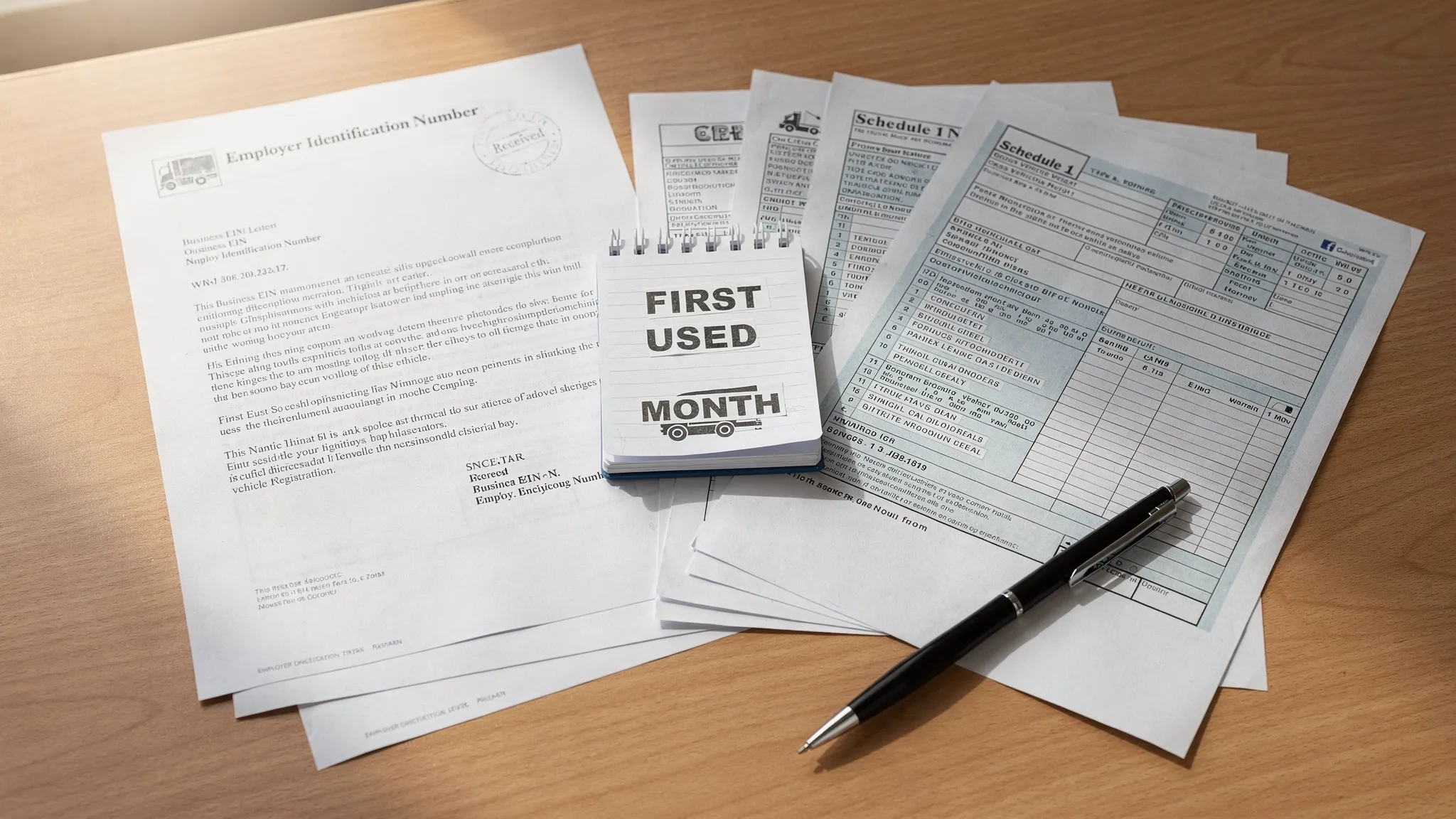
The Schedule 1 Form 2290 due date depends on the first use month of the vehicle on public highways. For most carriers, vehicles first used in July must be filed by August 31. If your vehicle's first use month is different, the due date is the last day of the month following that first use month.
- First use in July: Due August 31
- First use in October: Due November 30
- First use in January: Due February 28
SimpleForm2290 automatically calculates your first use month IRS 2290 and generates the correct filing period so you never miss a deadline.
Can You File Both Online?
Yes, and you should. Filing online is faster, more accurate, and provides immediate confirmation.
Filing BOC-3 online:
Most carriers use a licensed process agent company to file BOC-3 online directly with the FMCSA. The FMCSA BOC-3 submission is made through the Unified Registration System (URS). Once submitted, the filing becomes part of your permanent FMCSA record.
Electronic file Form 2290 and pay online:
The IRS strongly encourages e-filing for anyone with 25 or more vehicles. For fleets, bulk and fleet filing through an authorized provider is the most efficient route. SimpleForm2290 supports single-vehicle filers and large fleets alike, offering the ability to electronically file Form 2290 and pay online in just a few steps. Once processed, your stamped 2290 Schedule 1 for IRP is available immediately for download.
Real-World Scenario: A New Owner-Operator Starting Out
Consider Maria, a new owner-operator launching her own authority in Texas. Here is what her compliance checklist looks like in her first 30 days:
- Apply for EIN from the IRS (required before filing Form 2290)
- Submit her FMCSA BOC-3 through a licensed process agent service
- Receive her MC number and DOT number from the FMCSA
- File Form 2290 through SimpleForm2290 using her vehicle identification number (VIN) and taxable gross weight
- Receive her stamped Schedule 1 and submit it for her IRP truck registration
Many new carriers mistakenly believe that a BOC-3 filing and a Form 2290 filing are interchangeable or that one covers the other. They do not overlap. Missing either one creates a different compliance problem with a different agency.
Penalties for Non-Compliance
Missing your BOC-3:
- Operating without active process agent coverage violates FMCSA regulations
- The FMCSA can revoke your operating authority
- You may face civil penalties for unauthorized operation
Missing your Form 2290:
- The IRS charges a 4.5% monthly penalty on unpaid tax for the first five months
- An additional 0.5% monthly penalty applies for failure to pay after assessment
- Interest accrues on top of penalties
The IRS does not send reminders. It is your responsibility to know your filing deadline based on your vehicle's first use month.
How SimpleForm2290 Helps?
SimpleForm2290 is one of the most trusted platforms for truckers who want fast, affordable, and accurate 2290 filing. Here is what makes it stand out:
- Instant stamped Form 2290 Schedule 1 delivery
- Supports taxable weight amendments if your vehicle weight changes
- Bulk and fleet filing for carriers managing multiple VINs
- Step-by-step filing guided by Form 2290 instructions
- Transparent pricing, making it the cheapest 2290 e-file option for many owner-operators
- Status as an IRS Authorized E-file Provider, ensuring your filing is accepted
For carriers asking about Form 2290 and IRP registration, SimpleForm2290 makes it simple to get your Schedule 1 in time for your state registration renewal.
Frequently Asked Questions
1. What is a BOC-3 and why does my trucking company need it?
A BOC-3 is a blanket of coverage filing submitted to the FMCSA that designates a process agent in every state where you operate. Your trucking company needs it because the FMCSA will not grant or maintain your operating authority without an active BOC-3 on file. It is a one-time filing with no annual renewal, but it must remain active throughout your operations.
2. Is a BOC-3 the same as Form 2290?
No. A BOC-3 is an FMCSA compliance filing that appoints a legal process agent. Form 2290 is an IRS tax form used to pay the Heavy Vehicle Use Tax on trucks weighing 55,000 pounds or more. They serve different purposes, are submitted to different agencies, and are both required for most for-hire trucking operations.
3. Who needs to file a BOC-3?
Any for-hire motor carrier, freight broker, freight forwarder, or leasing company that requires FMCSA operating authority must file a BOC-3. If you are a private carrier that does not operate under FMCSA authority, you may not need one, but you should verify your specific operating status.
4. When is Form 2290 due, and what happens if I miss the deadline?
For vehicles first used in July, Form 2290 is due by August 31. For other first-use months, the deadline is the last day of the following month. If you miss the deadline, the IRS charges a 4.5% monthly failure-to-file penalty for up to five months, plus interest on the unpaid tax amount.
5. Can I file Form 2290 online and get my Schedule 1 immediately?
Yes. When you use an IRS Authorized E-file Provider like SimpleForm2290, you can complete your 2290 filing in minutes and receive your stamped Schedule 1 almost instantly. This is especially important for carriers who need the Schedule 1 to complete their IRP truck registration or to get back on the road quickly.
Conclusion
BOC-3 and Form 2290 are two of the most important compliance filings for any trucking operation, and confusing them or skipping either one can result in serious consequences. The BOC-3 keeps your FMCSA operating authority intact by designating a process agent, while Form 2290 satisfies your federal tax obligation on heavy vehicles and produces the Schedule 1 your state requires for registration.
Use platforms like SimpleForm2290 to handle your 2290 filing accurately and on time, and work with a licensed process agent to keep your BOC-3 current. Staying ahead of both filings means fewer surprises, no agency penalties, and more time focused on running your routes.